
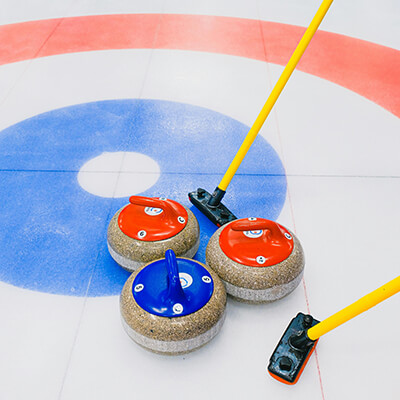
 With the 2026 World Women’s Curling Championship taking place right here in Calgary from March 14-22, many locals will be glued to the ice watching strategy, precision, and teamwork at the highest level. For some spectators, it sparks a familiar thought: “I’d love to try that.”
Curling may look gentle compared to faster-paced ice sports, but it still asks a lot from your body, especially when you’re new. Mobility, balance, strength, and control all play a role in helping the experience feel enjoyable and sustainable.
Why Curling Can Feel Harder Than It Looks
Curling involves repeated lunging, sliding, sweeping, and staying steady on a slippery surface. New players often feel surprised by how much coordination and endurance it takes, even in a short session. A bit of preparation can help your body feel more ready for those specific demands.
Getting Comfortable in the Delivery Position
One of the biggest challenges for new curlers is the delivery position. Dropping into a deep lunge asks for hip mobility, ankle stability, and core control. When those foundations are limited, people may compensate through the low back or knees, which can lead to post game stiffness.
Helpful areas to focus on include:
- Gentle hip mobility work
- Ankle stability and control drills
- Thoracic spine mobility for smoother posture and rotation
Custom orthotics may also help some curlers feel more stable through the feet and ankles, which can be especially useful when you’re learning the delivery position and spending more time sliding on the ice.
What Sweeping Really Asks of Your Body
Sweeping looks simple from the stands, but it can be surprisingly tiring. It involves repeated forward bending, shoulder engagement, and coordinated effort, often in short bursts. If your shoulders, neck, or upper back feel tight, fatigue can build quickly.
Chiropractic care can support joint mobility and overall movement patterns, which may help your body coordinate repetitive movement more comfortably over time.
Balance and Coordination on the Ice
Balance is a big part of curling. You’re sliding while staying steady, aiming accurately, and thinking about timing and strategy. When your body is adapting well, balance and coordination often feel easier to work on, which can help you stay more confident during play.
“Curling is a great example of a sport that looks gentle but still places specific demands on the body,” says Calgary chiropractor Dr. Ryan Wagemakers. “When your nervous system is functioning efficiently, your body can adapt better to those demands, which often means smoother movement and less post-game soreness.”
How to Ease Into Curling Without Overdoing It
If watching the World Women’s Curling Championship has you ready to try the sport, start simple and build gradually. Many people do best when they pay attention to early signs of stiffness or imbalance and respond sooner rather than later.
A few friendly reminders:
- Start with shorter sessions and build up over a few weeks
- Take breaks between ends if you feel form slipping
- Warm up your hips, ankles, and shoulders before you play
- If something keeps feeling “off,” consider getting it checked out by an appropriate provider
Want to Feel More Confident on the Ice?
At Memorial Drive Chiropractic and Massage, we support active Calgarians of all experience levels by helping their bodies move and adapt more comfortably. Whether you’re picking up a broom for the first time or returning to the ice after years away, preparation can make a real difference.
If you’d like to move with greater ease on and off the ice, contact our practice today to schedule a visit!